From Father to Nothing · chapter six
The Worst Way
Previously: Structure Helps
"Michal, what would be the very worst way to do it?" Adam Wojnar asked me in one of our conversations. "I mean it. What is the best way to wreck the handover of the company and the wealth to my children, once I am no longer here?"
I laughed. "That is easy. No company; keep everything in your own name. No legal entities, no structure. Let it all run purely on you. Above all, no standing orders on the accounts. So that you can queue at the post office with payment slips or, better still, pay in cash. Do not write down who owes you what, or what you owe to whom. Let there be no system in it."
"That sounds like a plan. What next?"
"Build the whole thing like a star. Everything and everyone converges on you, the only boss. You are the centre of the universe. Nobody else decides, nobody else has full access."
"So far I am doing splendidly," he admitted, amused.
"And then comes the best part. You die suddenly. Ideally with no preparation. Surprise! So that nobody gets bored. And you will have small children, say five years old. No wife, just a girlfriend you no longer get on with very well. And in your will you state explicitly that she inherits nothing. Only the children. Let the guardian and the court sort it out."
"That sounds like a lovely family thriller."
I have not yet seen a combination quite that extreme. In parts, yes, and quite often. The payment slips and the missing standing orders I know from home. That is how my father paid.
Entrepreneurs are often men, and often with complicated family relationships. Two children. One takes no interest in the business, so everything goes to the other. And then you remember you have one more child, from an earlier relationship. So not two; three, in fact. That one gets nothing. But above all, let there be no disputes in the family. With the naive idea that after the death, relationships will somehow settle.
It sounds absurd. But when we give these people three months to talk it through with their family, mostly nothing happens. Three months later I call again and hear: "We have not discussed it yet, but we are about to. We are going on holiday now; I will raise it there."
And then again: "I have started transferring some of the real estate. But the business? Not yet. I do not want my child running the business yet. But they could shadow me. When the time comes, I will hand it over."
All of this leads to one thing. Paralysis. And unless someone from outside breaks it, nothing moves.
It was the same in our house. My father and I talked about a will, and he said he ought to write one. I said: "You should." And that was that.
Why does this happen?
My brother-in-law, Martin Stachoň, is a psychologist and an economist. He has long worked on the psychology of finance. And do you know how many times the two of us had talked in any depth about business in the family? The first time was while preparing this book.
Money and wealth are rarely talked about in families. It is a taboo, and the silence is passed quietly from generation to generation. Our parents did not discuss it with their parents, and we inherited the silence. I am more likely to know where you went on holiday and what you had for breakfast than the balance of your account.
In one interview the host asked me why it is such a problem to talk about money. "Then tell me how much money you have," I replied. He stopped short. Of course he did. It is information we tell nobody. We would rather share a great many intimate things than that one. Let alone how much we owe. Or what went wrong and what we are hiding.
Business owners are used to solving problems with other people, yet often tell their own family nothing at all about the business. Or only some bearable parts. We show only what works. What does not work, we do not show. We keep the mask we have worn all our lives as entrepreneurs. That we will manage, and that we know. And when we go, we leave behind a chaos that is hard to deal with even in a good state of mind.
When a business has worked for a long time, the founder’s confidence grows. "I know best how it is done. I built it." And he is right. If he were not, he would not be a successful founder. Yet more than 80% of drivers consider themselves above average. Among entrepreneurs and university professors it is over 90%. Statistically, that plainly does not add up.
And relying on the future to be a copy of the past is a recipe for trouble. History does not repeat itself. Perhaps it rhymes. Sometimes.
The emotional burden of leaving is brutal. To sell or hand over a company the founder gave his life to means losing what filled his life and what filled his day. Status. You lived for the business; there were no working hours. The money from a sale almost never outweighs the sense of loss. The pain of giving up your child is stronger than any compensation.
So, without knowing it, you invent ways not to part with the business. That is why many founders prefer to hand the company on within the family, even though, against all probability, they lower its chances of success. Entrepreneurs make up around ten per cent of the population; the better ones around five. The founder keeps the illusion that the wealth is still in one pile, and avoids facing the loss directly.
What this does to the successor, I see in companies an order of magnitude larger than ours was. The heir comes into the company, perhaps even into the best office. But decides nothing that matters and answers for nothing. It does not hurt when the work is done badly. And nothing extra is gained when it is done well.
And a business stands or falls on sales. If the heir is not commercially able and does not win the natural respect of the people around them, it will be extremely hard.
Then the heir formally takes over. Business partners keep turning to the founder. Employees go upstairs for the final word. And it turns out the handover happened only on paper.
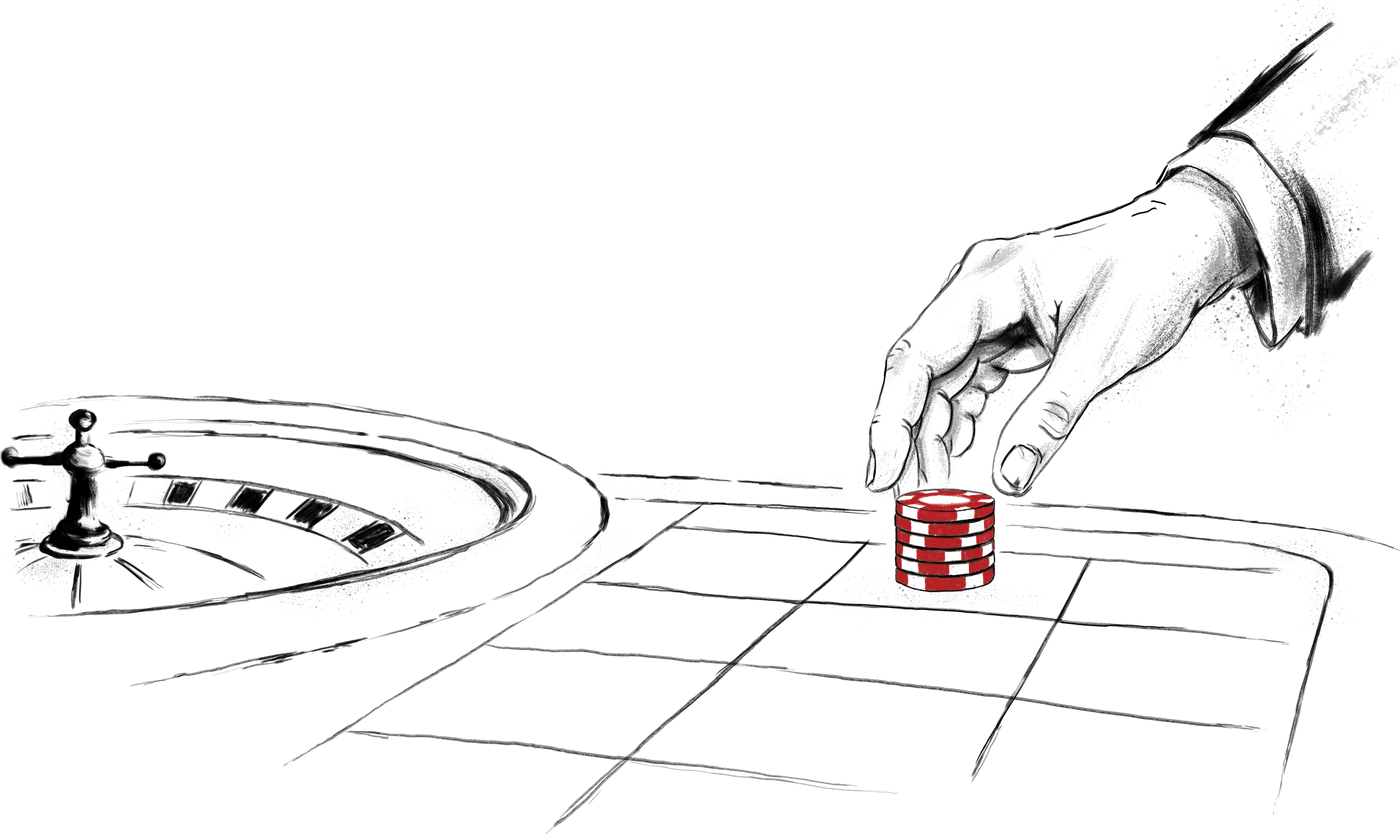
The founder of one large Czech company said that it is now running at some percentage, but that he hopes his grandson, perhaps, will lift the whole thing. That is a bet on a single number at roulette. Except that what he is staking is his relationship with his own grandson. If it works, it was expected of him. If it does not, he is a failure. And that it will not work is many times more likely.
I myself never pushed to take the company out of my father’s hands. About the operations I told him straight: "Look, I do not want to take over the bicycles or the kitchenware. But I will help you structure it the way you want." Honestly, I cannot imagine having made those changes alongside him. He would not have given me the room.
Handing it on without keeping a bypass around your successor is extremely hard. Someone will naturally start going around them and come straight to you. And you? Will you take that step back? Or will you catch yourself wanting to go on running it, only from a different position?
I am hardly blameless myself. To this day I have no will; I do not feel like writing one either. Everything essential, though, is structured in companies and in a family foundation.
And once already, I handed over in the very worst way.
Shortly after COVID, I dumped the leadership of our advisory group, SMPL, on Kirill Juran. I had no energy left for it. And I stopped answering emails.
Kirill handled it brilliantly. SMPL has sixty people today and is far bigger than I would have made it. I am basically a lazy person, and my bar for what is enough is low. Kirill is hungry. Even though I hold only a minority share, it earns me more than if I ran the firm myself.
Two things I did get right, though. I chose the person with the greatest commercial talent. To me, business is mainly about the ability to win clients and keep them. That is a rare ability. The rest, the delivery of the service, can be bought.
And when colleagues came to me wanting me to change his decisions somehow, I refused and sent them to him. That much strength I still had.
A founder who cannot hold his ego in check can sabotage a successor beyond belief. Employees are closer to him and naturally look to him for protection. Until I dismiss the successor, I am to support them. To speak well of them, whatever I may think. You may be a listening ear. Not a second track.
I would not advise anyone to disappear. To choose a person who can win clients, and then to stay out of their way: that, yes. Luck, or did I do it right? Both. It turned out well.
So, what to do?
Martin and I have put it into a few pieces of advice.
For founders:
Think about the future. Picture how you want to live in ten, twenty years’ time, so that you are content.
Find something to fill your day other than the business. For founders it tends to be the only hobby. You need other interests, to be able to step away from the company at least for a while.
Try things and delegate. Hand over responsibility in small steps. Give the successor one department, write down their rights and duties and, as far as you can, do not interfere. I did it all at once. It worked. I do not recommend it.
And try it more than once. Very little in life really works the first time. Trying to hand over or sell a business, even a small part of one, is a great thing to do. That is the real experience.
Bring in someone from outside who has experience of business and of handing one over. A view unburdened by history and relationships is enormously valuable. And so is being able to talk openly with someone about the business. It is windy at the top of the structure, and you are alone there.
And for successors:
Listen more, act less. At the start, do not try to convince the founder that you are right. Instead of pushing changes through, offer options.
Expect the handover to take years: small steps, then bigger ones, and a great deal of trying out what works and what does not.
And look after your relationship with your parents. It tends to be worth more than the business itself.
And as I have written before: let the next generations hand something over or sell something too. Let them learn. Not merely keep what is already there. The only certainty is that one change will follow another. Support what works. Leave what does not.